Event
NAACOs 2026 Conference
Arcadia heads to NAACOS Fall 2026 in Washington, DC. Visit Booth A, join our session on proactive financial management in VBC, and book time with the team.

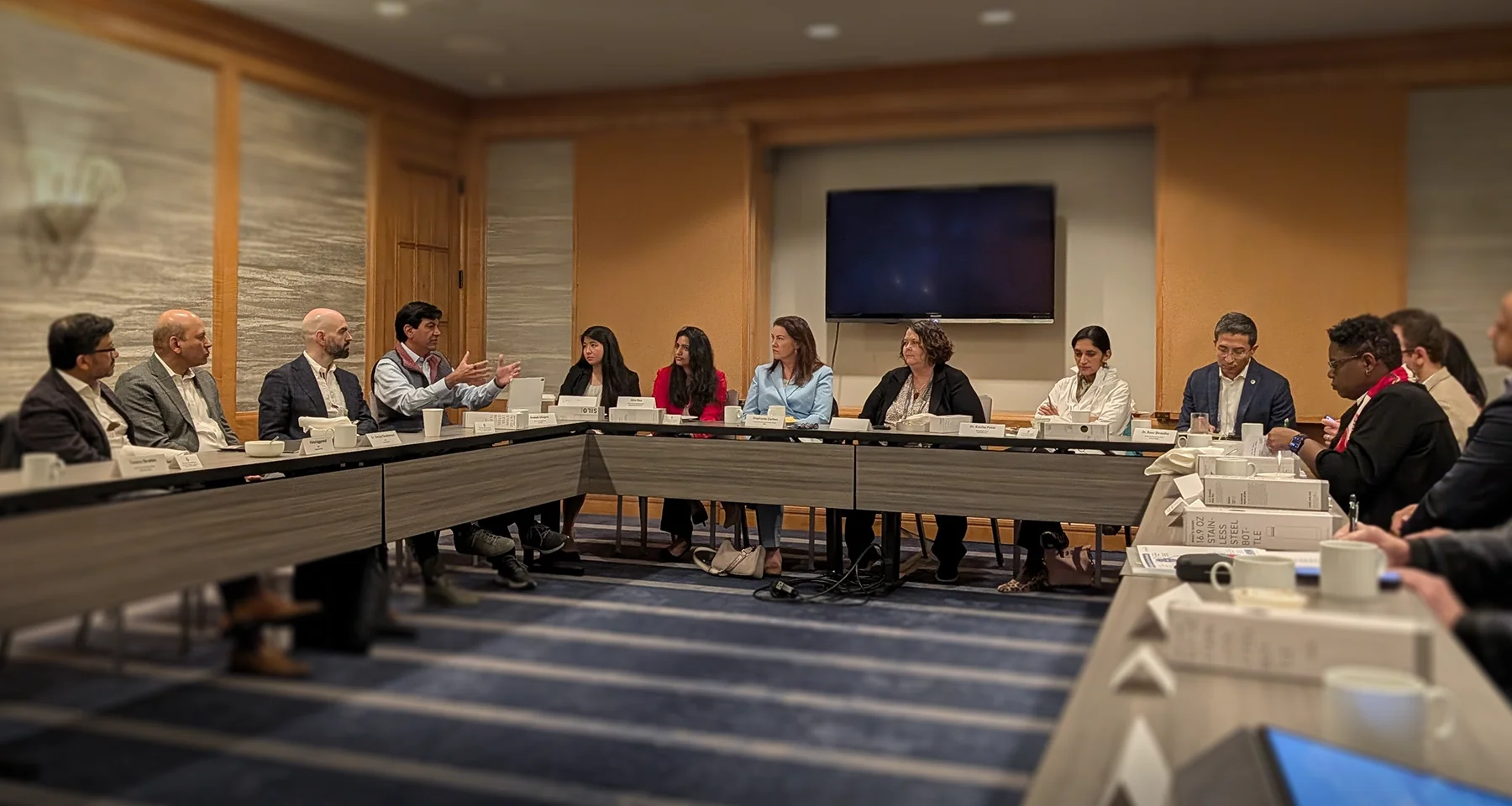
On the sidelines of this year’s J. P. Morgan Healthcare Conference in San Francisco, Arcadia convened roughly 25 health system executives, ACO leaders, and state officials for a discussion centered on how states, payers, and providers can collaborate more effectively to advance rural clinical transformation through the Centers for Medicare & Medicaid Services (CMS) Rural Health Transformation Program (RHTP).
In this article, we investigate how this moment—arguably the most significant data infrastructure investment since the era of Meaningful Use—is elevating a longstanding challenge to the national stage.
Leaders from CMS—including Amy Gleason, Acting Administrator of the U.S. DOGE Service and Strategic Advisor to CMS, Stephanie Carlton, CMS Deputy Administrator, Gita Deo, CMS Innovation Center Senior Advisor, and Emily Chen, Senior Advisor to CMS—underscored that while RHTP will ultimately be judged on outcomes, 2026 is intentionally designed as a process year. States are committing to policy options that promote prevention, market competition, and open data infrastructure. CMS has stood up a dedicated Rural Health Office, assigned staff with expertise in specific themes that are priorities across multiple states, and plans to facilitate best-practice sharing through webinars and ongoing stakeholder engagement.
Importantly, CMS leaders also emphasized that rural transformation is not solely an economic or payment reform exercise. Attendees praised Gleason for helping tee up this moment—underscoring that expanding consumer access and activation, especially in rural communities, must be central to the work ahead.
Recent advances in consumer-facing technologies and AI-enabled tools, highlighted throughout JP Morgan week—including high-profile announcements related to large language models such as Claude and ChatGPT—reinforce the opportunity to make healthcare navigation, engagement, and access meaningfully easier for patients and families. These developments, aligned with commitments OpenAI and Anthropic made in July 2025 in conjunction with the CMS Health Tech Ecosystem launch, point to a future where consumer activation is not an afterthought, but a core enabler of rural health transformation.
Participants shared novel approaches already taking shape: health systems collaborating on “common utilities” to support rural facility partnerships; ACO models emphasizing virtual care and consumer navigation; and new efforts to expand rural participation in clinical trials.
A recurring theme was how shared services, reference architectures, and FAQ-driven guidance could help ensure these models align with both the letter and spirit of federal funding opportunities. Several participants noted that we are not starting from zero. States have been investing for years in Medicaid and rural innovation, creating assets that others can now reuse and adapt.
Existing initiatives—such as reusable technical frameworks and open-source approaches emerging from programs like California’s CalAIM, supported by our work for the California Department of Health Care Services (DHCS)—demonstrate how organizations can leverage proven work across markets rather than rebuild state by state.
A deep dive on the CMS Health Tech Ecosystem highlighted rapid growth—from 60 early adopters at launch to more than 600 today. CMS shared community demand to expand the number of working groups from about a dozen today to more in the future focused on clinical trials, imaging, and real-time benefit checks. We expect CMS to provide additional details soon.
Last December, CMS updated Health Tech Ecosystem categories to include states, inspired by Louisiana’s early commitment to enable a CMS Aligned Network statewide. At last count, nine states explicitly referenced Health Tech Ecosystem as part of their rural health proposals (AK, ID, LA, MA, NV, OR, PA, VA, WI). We expect many more to follow as the use cases states prioritize will require an interoperability framework that levels the playing field for data sharing among payers, providers, and consumer-designated apps.
CMS further expects to convene participants in the forthcoming CMS ACCESS model, which rewards physician clinics for outcomes rather than payment tied to volume of services delivered (RVU-based compensation). All model participants will commit to data sharing and must implement efforts to digitize voluntary alignment.
These requirements sparked discussion about the opportunity—and necessity—for industry-wide consensus on shared infrastructure.
One of the most active areas of discussion centered on how stakeholders can work together across state lines. Participants raised questions about multi-state collaboration and whether RHTP would support efforts that extend beyond individual state boundaries.
CMS leaders—including representatives from the Office of Rural Health Transformation—encouraged this thinking, reinforcing that cross-state collaboration is not only allowed but welcomed. Multi-state approaches can accelerate learning, reduce duplication, and help rural communities benefit more quickly from shared solutions, particularly in areas like data infrastructure, consumer engagement, and clinical transformation.
The conversation reinforced a clear takeaway for states and market leaders alike: organize early, commit voluntarily, and help shape shared infrastructure that lowers friction for participation.
The public-private partnership model underpinning RHTP is bringing a longstanding rural health challenge to the forefront of national discourse—and creating a rare opportunity to align policy, technology, and practice.
As JPM week demonstrated, progress will hinge less on any single policy and more on sustained collaboration—across states, providers, payers, and technology partners—to turn promising initiatives into durable outcomes for rural communities.